

The EU AI Act: what it really means for your website
Since August 2026, the transparency obligations of the EU AI Act apply. Sounds like legal clauses and panic, but for most businesses it's very manageable. We explain what matters.
Read more


For a few months now, almost every conversation about visibility eventually arrives at the same question: do we actually need one of those llms.txt files too? Usually someone has read about it, often paired with the promise that it gets you found in ChatGPT and the like. We recently created one for our own site and want to write down honestly what the file is, what it can do and what it can't.
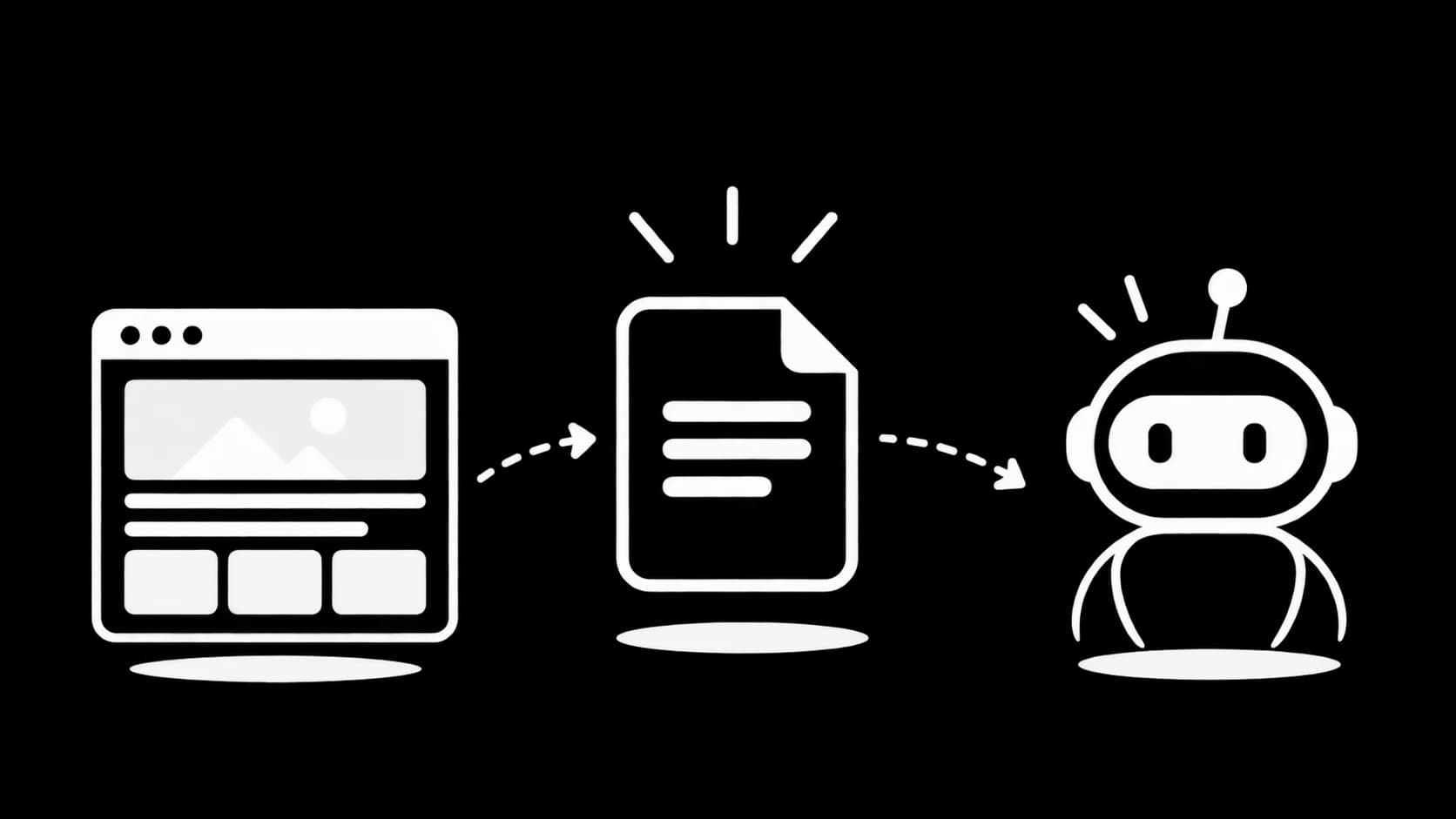
An llms.txt is a simple text file that sits in the root directory of a website, so at yourdomain.com/llms.txt. It isn't aimed at people but at language models. LLM stands for large language model, exactly the technology behind ChatGPT, Claude or Perplexity.
The idea comes from Jeremy Howard, who proposed it in autumn 2024. The thinking behind it makes sense. A normal website is pretty messy for machines: navigation, cookie banners, scripts, nested menus. A language model has to work its way through all of that to find a few useful sentences at the end. The llms.txt is an attempt to hand it those sentences directly.
Think of it like the note you hand a new colleague on their first day. Not a manual, but the most important things on one page.
It's written in Markdown, a plain text format that people and machines can read equally well. The structure follows a fixed pattern:
Our own file looks like this: HWM Agentur at the top, below it two sentences on who we are and where we're based. Then come our profile, the most important pages, our services, the technology we work with and the articles from this blog. The whole thing fits on one screen and took a good hour to write.
Some sites additionally create an llms-full.txt, which contains not just links but the complete content. That's mainly interesting for software documentation. A normal company site rarely needs it.
Because all three files sit in the same directory and sound similar, they often get mixed up. Yet they have very different jobs:
The first point is the most important. If you want to prevent AI providers from using your content, the llms.txt won't do it. That's still the job of the robots.txt. The llms.txt is an invitation, not a locked door.
This is where the promises online and reality are furthest apart. The llms.txt is not an official standard. No committee has adopted it, and none of the major AI providers has made a binding commitment to use it.
Google has even been fairly clear about it. People from the search team have said several times that Google doesn't use the file and compared it to the old keywords meta tag that search engines have long ignored. And many site owners who look at their access logs report that the well-known AI crawlers have so far rarely requested the file.
So if someone tells you that an llms.txt will get you to the top in ChatGPT, they're selling you something nobody can prove. We say this so clearly because we're hearing exactly these promises quite often right now.
If the file achieves so little, why is there one on our site? For three reasons:
In our view, the last point is the most valuable. While writing our own file, we noticed how hard it is to say in two sentences what you do and for whom. If you can't do that, you usually have a problem with it on your website too. In that sense the llms.txt is a pretty good exercise, even if not a single language model ends up reading it.
And if the idea does catch on, you're prepared. The risk is zero, the potential benefit somewhere between small and interesting.
If your goal is to appear in the answers of ChatGPT, Perplexity or Google's AI overviews, it's mainly your website itself that decides. These systems access the same content as search engines, and they like the same things:
That's basically the same work that helps with Google. We've written about this in more detail in our article on why the competitor with the worse website often ranks higher. An llms.txt can complement this work. It can't replace it.
If you want to try it, a simple text editor is enough. This is how we go about it:
Write it the way you'd explain it to a person. No list of search terms, no exaggerations. What's in the file should also be found on your website in exactly the same way, otherwise the picture doesn't add up in the end.
And remember to maintain it. An llms.txt that still lists services you stopped offering long ago is worse than none at all.
The llms.txt is a good idea that is still waiting to be truly needed. It doesn't hurt, it costs hardly anything, and it helps you get your own message to the point. Today it isn't a lever for more enquiries.
If you want to know how search engines and AI systems currently read your website, feel free to get in touch. We'll look at it together with you and tell you honestly where work pays off and where it doesn't. And if you like, we'll write your llms.txt along the way.

Since August 2026, the transparency obligations of the EU AI Act apply. Sounds like legal clauses and panic, but for most businesses it's very manageable. We explain what matters.
Read more
Your competitor's site looks like it's from 2012 and still ranks above you. Why that happens, what Google really evaluates and what you can do about it.
Read more
A website in five minutes is no longer a feat. It's just that you can tell with most of them. Why character makes the difference in the end.
Read more